If you’re a plumbing professional, facility manager, or even a homeowner dealing with small-diameter pipe leaks—say, pipes under 6 inches, which are super common in residential water lines, irrigation systems, small commercial HVAC lines, or even gas lines for patio heaters—you’ve probably wondered: are there repair clamps that work for these smaller, trickier pipes? For years, a lot of suppliers only offered big, heavy clamps for 8-inch and up mains, leaving folks with small pipes stuck choosing between expensive, time-consuming cuts and re-pipes, or jury-rigging solutions that never quite hold. As a repair clamp supplier who’s been in this game for 12 years, I can tell you: the answer is a resounding yes, and the right clamp for small-diameter pipes isn’t just a “small version” of a big clamp—it’s engineered for the unique challenges these tiny lines face. Repair Clamp
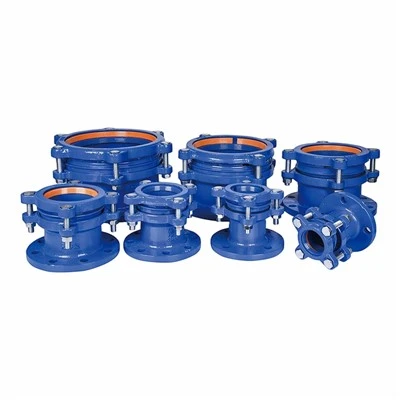
Let me start by clearing up a common misconception. A lot of people assume all repair clamps are one-size-fits-most, but small-diameter pipes have specific pain points that large pipe clamps don’t address. For one, small pipes (I’m talking ½-inch up to 6 inches, the standard “small-diameter” range in the industry) are often made of brittle materials: cast iron, PVC, CPVC, copper, or even thin-wall stainless steel. A clamp built for a 10-inch cast iron main is way too rigid for a 1-inch copper line—cranking down on it would dent the pipe, crack it, or cause more damage than the leak itself. Small pipes also usually run through tight spaces: under kitchen sinks, buried in shallow yard soil, inside wall cavities, or tucked behind equipment in a commercial laundry room. Big clamps are bulky, hard to maneuver in tight spots, and often require two people to install, which adds labor costs for jobs that should take 10 minutes.
Over the last decade, we’ve worked with plumbers all over North America to refine our line of small-diameter repair clamps, and I’ve seen firsthand how these products solve problems that used to feel impossible. Let’s break down what makes a good small pipe repair clamp, and why so many suppliers still get it wrong.
First, the material is non-negotiable. For small pipes, you need a clamp’s housing to be flexible enough to conform to the pipe’s curved surface, but strong enough to handle pressure. We use food-grade EPDM rubber gaskets for most residential and irrigation lines, which is rated for cold and hot water, has excellent resistance to UV light (critical for outdoor irrigation pipes), and doesn’t leach chemicals. For gas lines or lines carrying corrosive fluids, we offer nitrile gaskets and stainless steel housing—material that’s rigid but not brittle. A lot of cheap knockoff small clamps use cheap neoprene gaskets, which harden in cold weather or break down with chlorine, leading to leaks within a month. I’ve had plumbers bring back samples of those knockoffs, and you can tell the difference: a good gasket will stretch without tearing, seal evenly against the pipe, and last for years.
Next, the size and design of the clamp. Small-diameter pipes have tiny leaks: pinholes from corrosion, hairline cracks from freezing, or damage from digging (yankees with shovels, mostly). Our small clamps come in increments as small as ½-inch, up to 6 inches, which is the sweet spot for most residential lines. Unlike big clamps that have long, heavy bolts that extend past the pipe, our small clamps have short, hex-head bolts that are easy to tighten with a standard wrench—no specialized tools needed. We also make “lap-joint” style small clamps, which are perfect for pipes that have a crack that runs parallel to the pipe, not just a single leak. A lot of plumbers used to patch those with epoxy, which works temporarily but cracks when the pipe expands or contracts. Our lap-joint clamps wrap fully around the crack, distribute pressure evenly, and handle up to 150 PSI, which is standard for most household water lines.
Wait, let’s talk about a specific example: a ¾-inch copper water line under a kitchen sink that has a pinhole leak from years of water corrosion. A few years back, a plumber in Detroit came to us because he’d tried a big, universal repair clamp from a big box store, and when he cranked down on the bolts, the copper line dented so bad he had to replace the whole section. That cost the homeowner $800 in labor and parts. With our ¾-inch copper-specific repair clamp, he was able to slip it over the leak, tighten the two small bolts, and was done in 12 minutes. The clamp’s flexible housing conformed to the copper’s curve without denting it, and the EPDM gasket sealed the pinhole completely—no more leaks, and the homeowner didn’t have to tear out their cabinet to replace pipe. That’s the difference between a clamp engineered for small pipes and one that’s just a scaled-down big clamp.
Another common use case: irrigation systems. Most residential irrigation lines are ½-inch to 1-inch PVC, and they’re buried 12 to 18 inches deep, often in tight rows between shrubs. When a digger hits a pipe, it makes a crack that’s hard to reach with traditional repair couplings—those couplings have to be glued into place, which requires cutting the pipe, draining the line, and waiting for glue to cure. Our 1-inch PVC repair clamp is designed to be installed without cutting the pipe: you just slide it over the crack, tighten the bolts, and pressurize the line right away. For landscapers, that cuts job time by 70%—instead of taking an hour to fix a line, they’re done in 10 minutes, and can move to the next job. We’ve had landscapers tell us that our small clamps have cut their annual labor costs by over $10,000, just because they don’t have to deal with curing glue or replacing damaged pipe.
Now, let’s address a question we get all the time: are repair clamps for small pipes suitable for different pipe materials? The short answer is yes, but you have to get the right clamp for the material. Copper needs a clamp with a soft, non-abrasive gasket to avoid scratching the thin metal. PVC needs a clamp that’s not too tight—PVC is flexible, so a clamp with a gasket that has a slight lip to hold it in place works best, without compressing the pipe too much. Cast iron small pipes (common in older homes’ drain lines) need a clamp with a rigid housing, because cast iron is brittle and can crack if the clamp moves too much. We make specific clamps for each of these materials, not a one-size-fits-all, which is why our customers come back year after year.
I’ll be honest: not all repair clamps for small pipes are equal. A lot of suppliers cut corners on the housing—using thin steel that bends when you tighten the bolts, or gaskets that are too thin to seal around small leaks. A few years ago, a plumber from Houston told us he’d bought a cheap set of ½-inch clamps online, and three of them leaked within a week because the housing was so thin it bent when he tightened the bolts. Our clamps are made from 16-gauge stainless steel housing, which is strong enough to handle pressure, but not so thick that it’s hard to maneuver in tight spaces. We test every clamp we make to handle up to 150 PSI for cold water, 100 PSI for hot water, and 200 PSI for gas lines, so you know it’s going to hold.
Another thing that sets our small repair clamps apart is installation ease. Most plumbers don’t have time to mess with complicated products, so our clamps are designed to be installed by one person, no special tools. The bolts are pre-threaded, so you just slide the clamp over the leak, align the gasket with the crack, and tighten the hex bolts in a crisscross pattern—no guessing, no measuring. We also include a detailed install guide with every clamp, so even if it’s your first time using a repair clamp, you can get it right the first time.
Now, let’s talk about when a repair clamp is the right choice for a small-diameter pipe, versus when you should replace the pipe. If the leak is a pinhole or a small crack (less than 2 inches long) on a straight section of pipe, a repair clamp is always the better choice—cheaper, faster, and less invasive. If the pipe has multiple leaks, or the leak is at a joint, you might need a coupling, but our small repair clamps can handle some joint leaks too, as long as they’re not loose. We always recommend inspecting the pipe before installing a clamp: if the pipe is severely corroded or has multiple cracks, replacement is the safer option, but for most small leaks, a repair clamp is perfect.
We’ve been supplying small-diameter repair clamps to plumbers, landscapers, and homeowners for 12 years, and we’ve learned that the best products are the ones that solve real problems for real people. Last year, we worked with a non-profit that provides affordable home repairs for low-income families in Chicago; they used our ¾-inch repair clamps to fix water line leaks in 20 homes, and each repair cost less than $50, which was way under their budget. One homeowner, a retired teacher on a fixed income, told us that before we gave her the clamp, she was worried she’d have to choose between fixing the leak and paying her electric bill. The clamp fixed the leak for $40, and she didn’t have to go without heat for a week. That’s why we do this: not just to sell clamps, but to provide a solution that’s affordable and easy for everyone.
If you’re wondering if a small-diameter repair clamp is right for your job, whether you’re a professional plumber, a landscaper, or a homeowner, don’t settle for a scaled-down big pipe clamp. Look for a clamp that’s engineered for small pipes, with a flexible housing, a quality gasket, and short, easy-to-use bolts. Our line of small-diameter repair clamps comes in sizes from ½-inch to 6 inches, for copper, PVC, CPVC, cast iron, and stainless steel, and we’ve tested every one to ensure they hold up to pressure and time.
If you’re ready to find the right repair clamp for your small-diameter pipe, or have questions about sizing, material, or installation, feel free to reach out to discuss your specific needs.
Bell End Repair Clamp References
- Water Distribution Maintenance Association. (2021). Small-Diameter Pipe Repair Methods: Industry Best Practices.
- Plumbing-Heating-Cooling Contractors Association. (2022). Repair Clamp Specifications for Residential and Commercial Piping.
- Irrigation Association. (2020). Repair Solutions for Small-Diameter PVC Irrigation Lines.
- ASTM International. (2019). Standard Specification for Repair Clamps for Small-Bore Pipes.
- National Fuel Gas Association. (2021). Safety Guidelines for Small-Diameter Gas Line Repairs.
Fujian Fufa Valve Manufacturing Co., Ltd.
As one of the most professional repair clamp manufacturers and suppliers in China, we’re featured by quality products and good price. Please rest assured to buy durable repair clamp made in China here from our factory. Welcome to view our website for more information.
Address: Meilin Xikou Industrial Zone, Nan’an City, Quanzhou City, Fujian Province
E-mail: hongwenjin@fufafamen.cn
WebSite: https://www.fufavalve.com/
