As a communication tower supplier, I’ve spent the last 12 years standing on top of 300-foot towers in rural Montana, midtown Manhattan’s concrete canyons, and coastal Florida’s hurricane-prone coast—checking bolts, calibrating antennas, and listening to the quiet hum of a network that most people take for granted. I’ve seen firsthand how communication tower tech has evolved from rusty steel poles holding a single analog antenna to smart, modular systems that power 5G, IoT, and emergency response for millions. But when people ask me what’s next, I don’t just talk about faster speeds or shinier hardware. I talk about the problems we’re actually solving, and the gaps we’re still closing. That’s why I wanted to break down the future of communication tower technology—not as a distant sci-fi fantasy, but as the work we’re already doing in our fabrication shops and on our job sites right now. Communication Tower
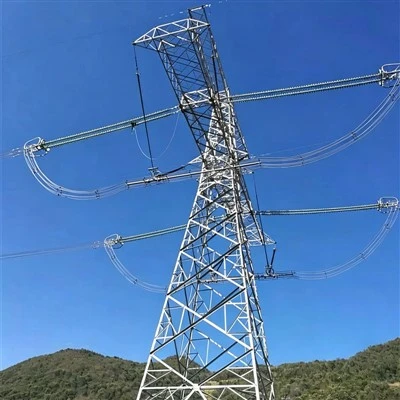
Let’s start with the biggest shift I’m seeing right now: modular, deployable towers that aren’t one-size-fits-all. For decades, communication towers were custom-built for each location: you poured a foundation for six months, craned a steel frame into place, and waited another three months to mount antennas. But today, we’re building modular systems that can be assembled in days, not months. Last year, we deployed a temporary tower for a college football championship in Texas—something that would have taken 12 weeks to build traditionally went up in 48 hours, and we dismantled it a week later with zero structural damage. That’s the future for event venues, disaster zones, and even temporary construction sites where we need to keep workers connected on the job.
But it’s not just temporary towers. Permanent modular towers are changing how we expand networks in urban areas, where every square foot costs a fortune, and zoning boards fight to keep tall steel poles out of their neighborhoods. Instead of building a 300-foot self-supporting tower that blocks views, we’re installing smaller, lightweight monopoles that can be camouflaged as light poles, pine trees, or even street art sculptures. In Chicago’s Lincoln Park, we just finished a project where we disguised a 120-foot monopole as a mature oak tree—complete with synthetic leaves that blend so well, local residents often don’t notice it until their phone service drops. That’s a big win for cities: we’re meeting the demand for 5G connectivity without alienating the communities we serve.
Another area that’s blowing up right now is smart tower integration. A lot of people see communication towers as just metal and antennas, but the best systems we’re building now are multi-functional hubs. These aren’t just for cell service—they have sensors that monitor air quality, track wildlife migration, and even power small devices via solar panels mounted on their frames. Last year, we partnered with a rural utility company in Wyoming to outfit 12 of our towers with air quality sensors that track wildfire smoke levels in real time. That data’s shared with local fire departments and farmers, who use it to adjust irrigation and harvest schedules. It’s a perfect example of how communication towers are evolving from single-use assets to critical infrastructure that supports whole communities, not just mobile networks.
Of course, no conversation about the future of communication towers would be complete without talking about 5G and eventually 6G. I know a lot of folks are still wrapping their heads around 5G, but our team’s already testing prototypes for 6G-ready towers. The key challenge here is high-frequency millimeter wave (mmWave) signals—they’re fast, but they barely travel through walls, and they get blocked by trees or rain. That means we need a lot more small cells, and towers that can support dense, overlapping networks without interference. We’re working on smart beamforming technology that lets antennas adjust their signal direction in real time, so they can focus on individual devices instead of broadcasting in all directions. That’s going to cut down on energy use and make sure every user gets a reliable connection, whether they’re in a crowded stadium or a remote farm.
But here’s the part no one talks about enough: sustainability. For years, communication towers were energy hogs, drawing power 24/7 to keep antennas running. Now, we’re building towers that run on renewable energy. We’ve started integrating vertical wind turbines into tower frames—small, quiet turbines that take advantage of the constant wind at 100 feet and higher, combined with solar panels mounted on the tower’s base. We also use recycled steel in every tower we build now—our latest projects are 85% recycled steel, and we’re working to get that to 100% by 2027. That’s a big deal, because the telecommunications industry is one of the largest consumers of electricity in the U.S. If we can power our towers with clean energy, that’s a huge step toward reducing the carbon footprint of global connectivity.
I won’t sugarcoat it—we still have a lot of work to do. One of the biggest challenges is bridging the digital divide in rural areas. For decades, carriers have focused on dense urban markets because they promise a better return on investment, leaving small towns and farm communities with spotty service. The future of communication towers needs to address that. We’re currently working on low-cost, low-power towers specifically designed for rural regions that don’t have the budget for big, expensive infrastructure. These towers support IoT devices for precision agriculture—sensors that monitor soil moisture, track livestock, and even help farmers manage equipment remotely. That’s not just better communication; it’s better livelihoods for people who’ve been left behind.
Another hurdle is resilience. Climate change is making storms, wildfires, and floods more frequent and more severe. A lot of our older towers weren’t built to withstand Category 5 hurricanes or 100-mile-an-hour straight-line winds. That’s why we’re developing next-generation tower designs with reinforced bases, modular components that can be replaced easily after a storm, and even self-healing network systems that automatically reroute signals if part of a tower is damaged. After Hurricane Ian in 2022, we sent a team of technicians to Florida that deployed our temporary resilient towers in 24 hours, when permanent infrastructure was still underwater. That kind of fast, reliable support is going to be non-negotiable as extreme weather becomes the new normal.
Now, I know some people are worried about what this means for the future—will we end up with towers everywhere, cluttering up our cities and countryside? The short answer is no, not if we do it right. The trend right now is toward denser, smarter networks with smaller, more discreet infrastructure, not taller, more obtrusive towers. We’re also seeing technology like distributed antenna systems (DAS) that spread signals across multiple small nodes instead of relying on one big tower. That’s going to reduce the number of large towers we need, and make communication more reliable without sacrificing the look of our communities.
As a tower supplier, our role in this future is not just to sell metal and hardware—it’s to partner with carriers, cities, and communities to build infrastructure that works for everyone. That means listening when a neighborhood says they don’t want a 300-foot pole in their park, and working with them to design a camouflaged option. It means listening when a rural school says they need better service for virtual learning, and building a low-cost tower that fits their budget. It means investing in research and development to make towers more sustainable, resilient, and multi-functional, because that’s what the next generation needs.
If you’re a carrier looking to expand your network, a city planning for 5G, or a community working to bridge the digital divide, we’d love to collaborate on your next project. We bring decades of experience building and maintaining towers across every type of environment, and we’re committed to delivering solutions that meet your unique needs. Contact us to discuss your communication infrastructure goals, and let’s build the future of connectivity together.
Power Utility Pole References:
- International Telecommunication Union. (2023). Global Trends in Telecommunication Infrastructure.
- Federal Communications Commission. (2022). 5G Small Cell Deployment and Community Integration.
- Wireless Infrastructure Association. (2023). Sustainable Practices in Telecommunication Tower Manufacturing.
- National Oceanic and Atmospheric Administration. (2022). Extreme Weather Resilience for Critical Communication Infrastructure.
- IEEE Communications Magazine. (2023). 6G Network Design: Overcoming mmWave Propagation Challenges.
Qingdao Hongyuanfeng Power Equipment Co., Ltd.
Hongyuanfeng is one of the most professional communication tower manufacturers and suppliers in China, also supports customized service. Please feel free to wholesale advanced communication tower in stock here from our factory. Good service and quality products are available.
Address: No.42 Fengwu Road, Beiguan Industrial Park, Jiaozhou City
E-mail: 13808970205@163.com
WebSite: https://www.hyfsteelpod.com/
