Hey everyone, it’s Jake here—been in the bucket elevator chain game for like 12 years now, and let’s be real: half the calls I get from new operators start with “Wait, what even are the actual standards for these chains? I thought they were just… chains for buckets?” Spoiler alert: no, they’re not. Skimp on the right standards, and you’re looking at buckets dumping grain mid-elevator, cement dust clogging every part of your plant, or worse—total line downtime that costs you thousands (or tens of thousands) before lunch. Today I’m breaking down the real, actionable standards we actually use here at our shop, not just the textbook stuff, plus why cutting corners on specs is a fool’s bet. Bucket Elevator Chain
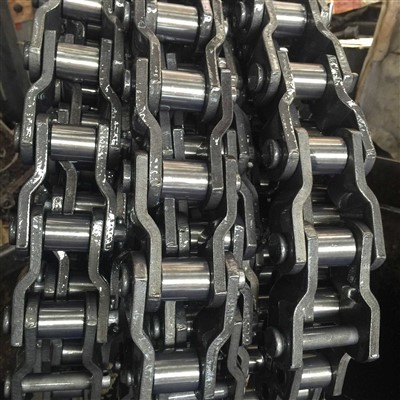
First off, let’s get one thing straight: bucket elevator chains aren’t one-size-fits-all. The standards we follow boil down to three core buckets—no pun intended: material specs, load rating benchmarks, and application-specific checks. If you ignore even one of these, you’re buying a chain that’s gonna let you down faster than a cheap phone battery.
Let’s start with materials, because this is the base. Most people don’t realize: not all steel is created equal. For standard ag or light industrial use, we stick to medium-carbon steel (think 1045 or 1050 grade) because it balances strength and flexibility—perfect for bending around sprockets without snapping. But wait, if you’re dealing with corrosive stuff? Like salt in grain, or wet concrete, or even fertilizer with ammonia? Standard carbon steel will rust through in 6 months. We don’t mess around here—for corrosive environments, we go with hot-dip galvanized carbon steel, or if it’s extra gnarly, 304 stainless. I once had a customer who used standard carbon chain for a salt elevator, and by month 4, the links were so rusted they’d stretch 2 extra inches. Total disaster. That’s the kind of call we live for now, fixing their mess, but we’d rather prevent that from the start. Also, for heavy-duty stuff—like mining ore or huge construction aggregate—we crank it up to alloy steel, like 4140, which has way higher tensile strength. No way we’d use that for a grain elevator, though—too brittle, and it’ll crack instead of give a little when the sprocket shifts.
Next up: load ratings. This is where most suppliers either fudge numbers or use generic “max load” that only applies if you’re hanging nothing on it. The actual standard we use is ANSI B29.1, which is the big one for power transmission chains in North America, right? Wait, but there’s also ISO 610 for international markets, so if you’re shipping overseas, that’s non-negotiable. Here’s the thing: load ratings aren’t just about how much the chain can hold by itself—they’re about how much it can hold while moving the buckets, the product, and withstanding the impact of dumping that product. A lot of guys look at “tensile strength” (the max force it takes to snap the chain) and think that’s the number to go by, but we use “working load limit (WLL)” instead. WLL is like 1/5 to 1/6 of the tensile strength, per ANSI standards—safety factor, basically. No exceptions. If a supplier tries to sell you a chain with a WLL that’s higher than ANSI, run. That’s them fudging the tensile number to look better, and you’ll regret it. Last year, a small feed mill tried that—bought a “heavy-duty” chain from some no-name seller, and it snapped on day 3, dumping 2 tons of corn all over the floor at 7 a.m. during rush hour. They lost like $15k in product alone, not to mention the downtime. Don’t be that guy.
Then we have application-specific standards, which is where the real expertise comes in. Chain for a grain elevator is totally different from chain for a cement plant, and even different from chain for a salt elevator, like we talked about. Let’s break down the main types here, since that’s what most guys are dealing with: first, roller chains vs. forged chains. Roller chains are for lighter loads—grain, seeds, small fertilizer, anything that’s not super heavy. They have those little rollers that spin around the sprockets, so less friction, which means less wear. For us, roller chains have to meet ANSI roller chain specs: pin diameter tolerances within 0.001 inches, roller roundness so they don’t skip on sprockets. Forged chain, on the other hand, is for heavy-duty: big aggregate, mining ore, Portland cement. These are made from solid steel, no little rollers, so they’re way stronger, but they wear faster if you don’t lube them right. Another thing: bucket attachment. The standard here is the pitch of the chain—pitch is the distance between each link pin, right? You have to match the pitch exactly to your sprockets and your buckets. If your pitch is off by even 1/8 of an inch, the buckets won’t line up right, they’ll spill product, and the chain will wear out 2x faster. I’ve seen that happen—guy bought a chain with a slightly wrong pitch, and after 2 weeks, half the buckets were leaning, dumping sand all over the elevator leg. Total waste. Also, for bucket elevators, you have to consider if it’s a centrifugal discharge elevator (that’s the common one, fast speed, flings buckets open at the top) or a continuous discharge elevator (slower, for finer products like flour, that slide out). Centrifugal ones need roller chains with higher speed ratings, per ANSI standards—continuous ones can use forged chain if needed, just adjusted for speed.
Wait, also, there’s a thing called “fatigue strength” that a lot of people overlook. That’s how well the chain holds up under repeated bending and stretching, not just one big load. ANSI B29.1 has fatigue test standards, and if your chain doesn’t pass that, it’ll break after a few months, even if the WLL is correct. That’s why we test every batch of chain we get—we run each link through a cycle of bending and pulling, just like it would in an elevator for a year, before we even put it in stock. No cutting corners on testing.
Now, let’s talk about what’s not a standard, but should be a best practice, because a lot of suppliers don’t mention this: compliance with OSHA and local industrial safety standards. Wait, yeah—OSHA has specs for equipment used in grain handling, mining, etc., that tie into chain strength, because if your chain fails, that’s a safety hazard. We make sure every chain we sell meets OSHA requirements for the industry it’s going into. For example, grain elevators have dust explosion risks, so the chain has to be rated to withstand static buildup? Wait, no, not exactly, but the structural safety specs tie directly to chain standards. If you’re in the US, OSHA 1910 is the big one for general industry, and they reference ANSI B29.1 for power transmission chains, so you’re already covered if you follow that.
Let’s also clear up some common myths. Myth #1: “Thicker chain is stronger.” No, not if it’s made with cheap steel. A thin, properly heat-treated alloy chain is way stronger than a thick, untreated carbon chain. We heat-treat all our chains—normalize and temper them—to get the right balance of hardness and toughness. That’s part of the standard, actually. If a supplier doesn’t mention heat treatment, that’s a red flag. Myth #2: “All chains made in China have the same standards.” Nah, not anymore, but a lot of cheap stuff from overseas skips ANSI or ISO specs. We source our chains from certified manufacturers that have their facilities audited every year to make sure they’re following ANSI and ISO, so we know every link is up to par. We don’t sell no-name chains from random factories, because we’ve seen what that does.
Wait, let’s get real—who is this for? If you’re a farm operator with a small grain elevator, a construction company running aggregate conveyors, a food plant moving flour or sugar, or a mining company hauling ore, these standards apply to you. Ignoring them isn’t just a cost thing—it’s a downtime thing, which is the killer for any business. When your elevator is down, you can’t ship product, you can’t make money. We’ve had customers tell us a single day of downtime costs them $20k+, so buying the right chain the first time is way cheaper than replacing a bad chain and dealing with lost production.
Let’s wrap this up with what you need to do if you’re shopping for bucket elevator chains, because that’s why you’re here, right? First, don’t just ask for “a bucket elevator chain.” Tell your supplier your application: what product are you moving, how much does each bucket hold, how fast does the elevator run, is it indoors/outdoors, is it corrosive? Then, demand to see specs that meet ANSI B29.1 (for North America) or ISO 610 (international) for load ratings, material, and fatigue strength. Ask if they do heat treatment—if they say no, walk away. And if you’re not sure, bring in your old chain: send us a photo, tell us what it’s used for, and we’ll help you match the right specs without you wasting money on the wrong stuff.

At the end of the day, bucket elevator chains are the unsung heroes of your operation. They move your product, keep your line running, and if they fail, they can mess up way more than just a link. We’ve been in this long enough to know that cutting corners on standards is never worth it, so that’s why we only sell chains that meet or exceed the standards we talked about here. If you’re in the market for new chains, need to replace a broken set, or just have questions about what’s right for your setup, hit us up—we’re here to make sure you don’t have that same panic call I got from that salt elevator customer a few years back. Don’t wait for a breakdown to get this right.
Transmission Chain References:
ANSI B29.1 – Roller Chains, Chain Sprockets, and Attachments
ISO 610:2019 – Continuous mechanical handling equipment for loose bulk materials – Bucket elevators
OSHA 1910.272 – Grain Handling Facilities Standard
ASTM A576 – Standard Specification for Carbon Steel Bars for Machinery
Zhejiang Hangte Chain Transmission Co., Ltd.
We are one of the most experienced bucket elevator chain manufacturers and suppliers in China since 1999. Please rest assured to buy high quality bucket elevator chain made in China here from our factory. If you have any enquiry about cooperation, please feel free to email us.
Address: No. 195 Qinglin East Street, Qingshan Lake Subdistrict, Lin’an District, Hangzhou City, Zhejiang Province
E-mail: hangtechain@gmail.com
WebSite: https://www.chinahtchain.com/
